




The Dirty Dozen

More on Substance Profile on POPs

The Stockholm Convention focuses on eliminating or reducing the releases of 12 POPs, the so called "Dirty Dozen". These 12 chemicals are:

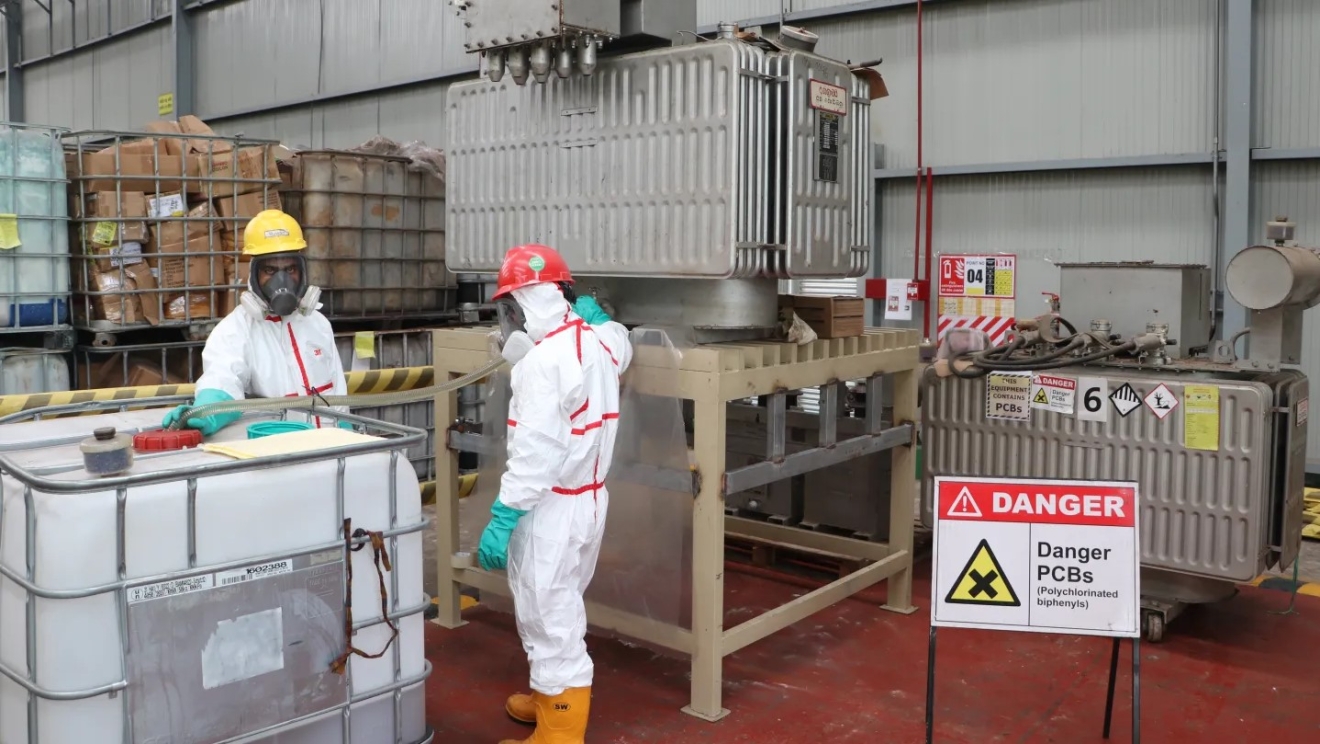
1. PCBs (Poly-chlorinated biphenyls):-

Trade Names for different mixtures (partial list): Aroclor, Pyranol, Pyroclor, Phenochlor, Pyralene, Clophen, Elaol, Kanechlor, Santotherm, Fenchlor, Apirolio, Sovol.

CAS No.: 1336 36 3

In PCBs the presence of Chlorine atoms which attached to biphenyl ring can vary from 2 to 10. PCBs show isomerism. There are a lot of homolog PCB molecules that have different isomeric structures. PCBs are generally inert, they are resistant to alkalies, acids and they have high thermal stability. They are industrially valuable compound used generally in dielectric fluids, transformers, capacitor, lubricants etc.

2.Dioxins:

Dioxins are a class of hydrocarbons which contain two 2 oxygen atoms generally attached to the para position of two benzene rings. Chlorinated dioxines are very stable which are less soluble in water and are less volatile. They particulate easily with air,water and soil. They are very toxic.
eg:-Pentachlorodibenzo-p-dioxins (C12H3Cl5O2).

3. Furans:

Dibenzofuran contains two benzene rings fused to a central furan ring. Choloro-Dibenzofurans(CDFs) are a class of compunds contain 1 to 8 chlorine atoms attached to the benzene rings of Dibenzofurans. It is nearly insoluble in water, relatively stable towards acids and alkalies and it withstands high temperatures.

4. Aldrin

CAS chemical name: 1,2,3,4,10,10 Hexachloro 1,4,4a,5,8,8a hexahydro 1,4:5,8 dimethanonaphthalene.

Synonyms and Trade Names (partial list): Aldrec, Aldrex, Aldrex 30, Aldrite, Aldrosol, Altox,
Compound 118, Drinox, Octalene, Seedrin.

CAS No.: 309 00 2; molecular formula: C12H8Cl6; formula weight: 364.92

Appearance: White, odourless crystals when pure; technical grades are tan to dark brown with a
mild chemical odour.

Properties: Melting point: 104 C(pure), 49 60 C(technical); boiling point: 145 C at 2 mm Hg; KH:
4.96 x 10 4 atm m3/mol at 25 C; log KOC: 2.61, 4.69; log KOW: 5.17 7.4; solubility in water:
17 180 µg/L at 25 C; vapour pressure: 2.31 x 10 5 mm Hg at 20 C.

Aldrin is toxic to humans; the lethal dose of aldrin for an adult man has been estimated to be about 5g, equivalent to 83 mg/kg body weight. Signs and symptoms of aldrin intoxication may include headache, dizziness, nausea, general malaise, and vomiting, followed by muscle twitchings, myoclonic jerks, and convulsions. Occupational exposure to aldrin, in conjunction with dieldrin and endrin, was associated with a significant increase in liver and biliary cancer, although the study did have some limitations, including a lack of quantitative exposure information. There is limited information that cyclodienes, such as aldrin, may affect immune responses.

5. Dieldrin

CAS Chemical Name:
3,4,5,6,9,9 Hexachloro 1a,2,2a,3,6,6a,7,7a octahydro 2,7:3,6 dimetanonapth[2,3 b]oxirene.

Synonyms and Trade Names (partial list):Alvit, Dieldrite, Dieldrix, Illoxol, Panoram D 31,
Quintox.

CAS No.:60 57 1; molecular formula: C12H8Cl6O; formula weight: 380.91.

Appearance: A stereo isomer of endrin, dieldrin may be present as white crystals or pale tan
flakes, odourless to mild chemical odour.

Properties: Melting point: 175 176 C; boiling point: decomposes; KH: 5.8 x 10 5 atm·m3/mol at
25 C; log KOC: 4.08 4.55; log KOW: 3.692 6.2; solubility in water: 140 µg/L at 20 C; vapour
pressure: 1.78 x 10 7 mm Hg at 20 C.

It is moderately soluble in organic solvents and nonflammable.

6. DDT

CAS Chemical Name: 1,1' (2,2,2 Trichloroethylidene)bis(4 chlorobenzene)

Synonyms and Trade Names (partial list): Agritan, Anofex, Arkotine, Azotox, Bosan Supra,
Bovidermol, Chlorophenothan, Chloropenothane, Clorophenotoxum, Citox, Clofenotane, Dedelo,
Deoval, Detox, Detoxan, Dibovan, Dicophane, Didigam, Didimac, Dodat, Dykol, Estonate,
Genitox, Gesafid, Gesapon, Gesarex, Gesarol, Guesapon, Gyron, Havero extra, Ivotan, Ixodex,
Kopsol, Mutoxin, Neocid, Parachlorocidum, Pentachlorin, Pentech, PPzeidan, Rudseam,
Santobane, Zeidane, Zerdane.

CAS No.: 50 29 3; molecular formula: C14H9Cl5; formula weight: 354.49.

Appearance: Odourless to slightly fragrant colourless crystals or white powder.

Properties: Melting point: 108.5 C; boiling point: 185 C at 0.05 mm Hg (decomposes); KH: 1.29
x 10 5 atm·m3/mol at 23 C; log KOC: 5.146 6.26; log KOW: 4.89 6.914; solubility in water:
1.2 5.5 µg/L at 25 C.

DDT is generally used as insecticide.

7. Endrin

CAS Chemical Name:
3,4,5,6,9,9, Hexachloro 1a,2,2a,3,6,6a,7,7a octahydro 2,7:3,6 dimethanonaphth[2,3 b]oxirene.

Synonyms and Trade Names (partial list): Compound 269, Endrex, Hexadrin, Isodrin Epoxide,
Mendrin, Nendrin.

CAS No.: 72 20 8; molecular formula: C12H8Cl6O; formula weight: 380.92.

Appearance: White, odourless, crystalline solid when pure; light tan colour with faint chemical
odour for technical grade.

Properties: Melting point: 200 C; boiling point: 245 C (decomposes); KH: 5.0 x 10 7
atm·m3/molecular; log KOW: 3.209 5.339; solubility on water: 220 260 µg/L at 25 C; vapour
pressure: 7 x 10 7 mm Hg at 25 C.

8. Chlordane

CAS Chemical Name:
1,2,4,5,6,7,8,8 octachloro 2,3,3a,4,7,7a hexahydro 4,7 methano 1H indene

Trade names: (partial list): Aspon, Belt, Chloriandin, Chlorkil, Chlordane, Corodan, Cortilan neu, Dowchlor, HCS 3260, Kypchlor, M140, Niran, Octachlor, Octaterr, Ortho Klor, Synklor, Tat chlor 4, Topichlor, Toxichlor, Veliscol 1068.

CAS No.: 57 74 9; molecular formula: C10H6Cl8; formula weight: 409.78

Appearance: colourless to yellowish brown viscous liquid with an aromatic, pungent odour similar to chlorine;

Properties: Melting point: <25 C; boiling point: 165 C at 2 mm Hg; KH: 4.8 x 10 5 atm m3/mol at 25 C; log KOC: 4.58 5.57; log KOW: 6.00; solubility in water: 56 ppb at 25 C; vapour pressure: 10 6 mm Hg at 20 C.

9. Hexa Chlorobenzene (HCB)

CAS Chemical Name: hexachlorobenzene

Trade names: (partial list): Amaticin, Anticarie, Bunt cure, Bunt no more, Co op hexa, Granox,
No bunt, Sanocide, Smut go, Sniecotox

CAS No.: 118 74 1; molecular formula: C6Cl6; formula weight: 284.78;

Appearance: White monoclinic crystals or crystalline solid

Properties: Melting point: 227 230 C; boiling point: 323 326 C (sublimes); KH: 7.1 x 10 3 atm
m3/mol at 20 C; log KOC: 2.56 4.54; log KOW: 3.03 6.42; Solubility in water: 40 µg/L at 20 C;
vapour pressure: 1.089 x 10 5 mm Hg at 20 C.

Hexachlorobenzene is very persistant in the environment due to its chemical stability and resistance to biodegradation.

10. Mirex

CAS chemical name:
1,1a,2,2,3,3a,4,5,5a,5b,6 dodecachloroacta hydro 1,3,4 metheno 1H cyclobuta[cd]pentalene

Synonyms and Trade Names (partial list): Dechlorane, Ferriamicide, GC 1283

CAS No.: 2385 85 5; molecular formula: C10Cl12; formula weight: 545.5

Appearance: White crystalline, odourless solid;

Properties: Melting point: 485 C; vapour pressure: 3 x 10 7 mm Hg at 25 C.

It is insoluble in water at normal conditions.

11. Toxaphene

CAS Chemical Name: Toxaphene

Synonyms and Trade Names (parital list): Alltex, Alltox, Attac 4 2, Attac 4 4, Attac 6, Attac
6 3, Attac 8, Camphechlor, Camphochlor, Camphoclor, Chemphene M5055, chlorinated
camphene, Chloro camphene, Clor chem T 590, Compound 3956, Huilex, Kamfochlor, Melipax,
Motox, Octachlorocamphene, Penphene, Phenacide, Phenatox, Phenphane, Polychlorocamphene,
Strobane T, Strobane T 90, Texadust, Toxakil, Toxon 63, Toxyphen, Vertac 90%.

CAS No.: 8001 35 2; molecular formula: C10H10Cl8; formula weight: 413.82

Appearance: Yellow, waxy solid with a chlorine/terpene like odour.

Properties: Melting point: 65 90 C; boiling point: >120 C (decomposes); KH: 6.3 x 10 2
atm·m3/molecular; log KOC: 3.18 (calculated); log KOW: 3.23 5.50; solubility in water: 550 µg/L at 20 C; vapour pressure: 0.2 0.4 mm Hg at 25 C.

12. Heptachlor

Chemical Name: 1,4,5,6,7,8,8-Heptachloro-3a,4,7,7a-tetrahydro-4,7-methanoindene (C10H5Cl7).

CAS Number: 76-44-8

Properties: Solubility in water: 180 µg/L at 25°C; vapour pressure: 0.3 x 10 -5 mm Hg at 20°C; log KOW: 4.4-5.5.

It is white crystalline solid and soluble in most organic solvents. the substance has a Camphor-like odor.